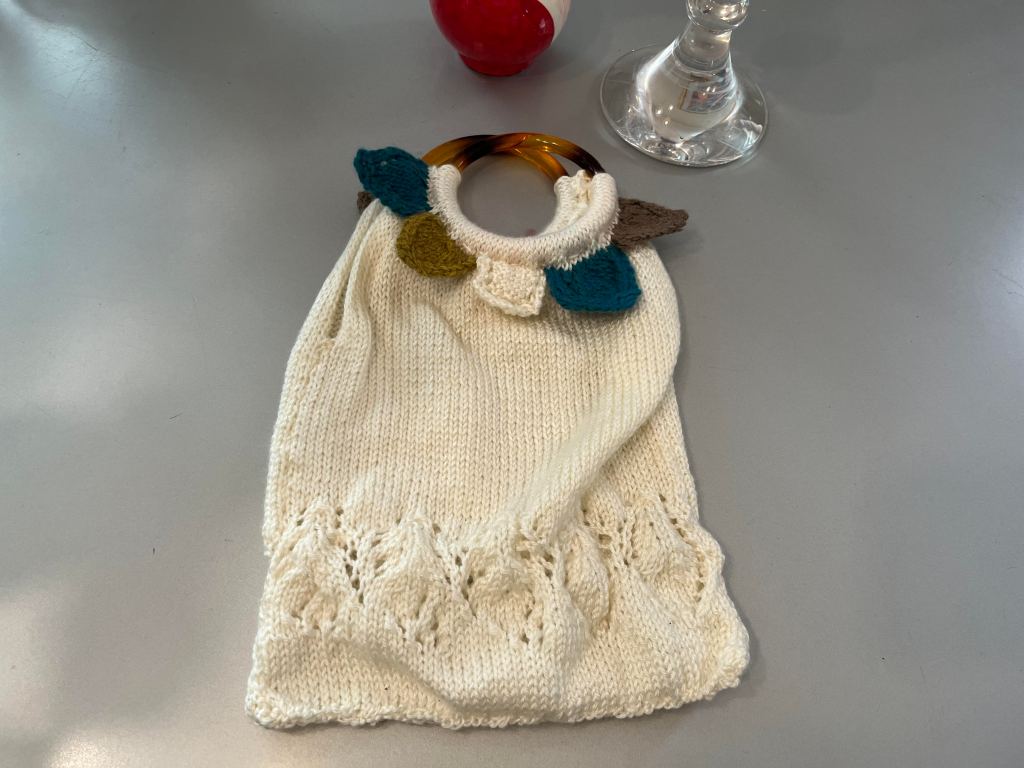
Really enjoyed knitting this darling little bag. Thanks to Elizabeth Jarvis for the pattern.
The blog about knitting and community.
Really enjoyed knitting this darling little bag. Thanks to Elizabeth Jarvis for the pattern.
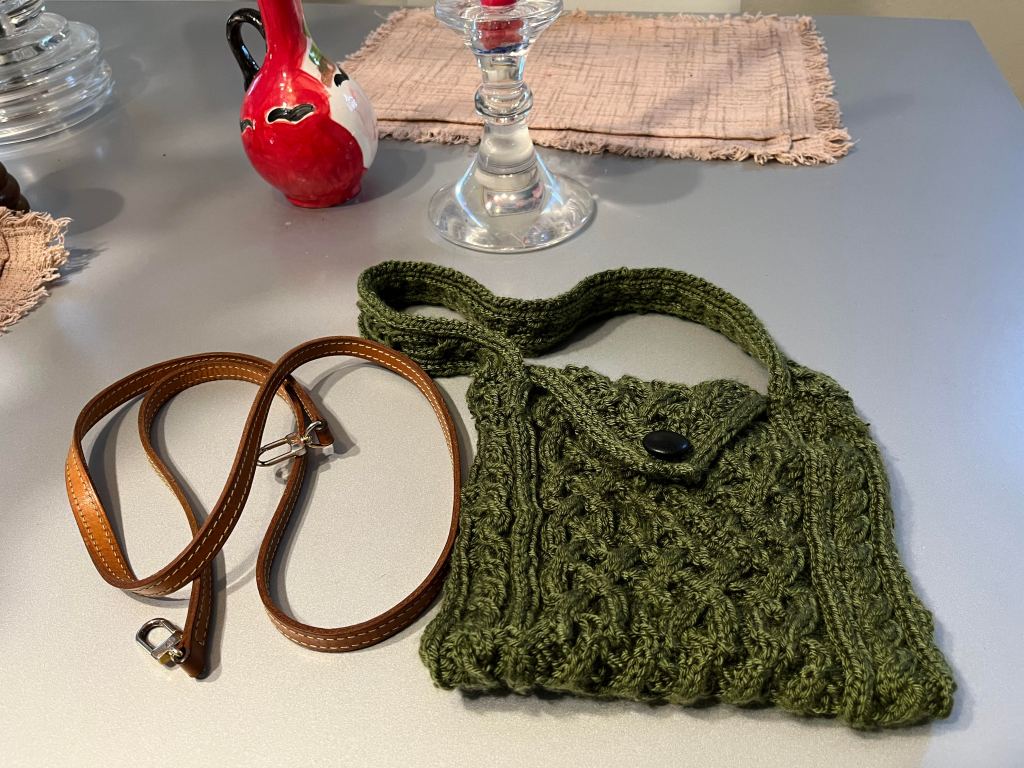
This bag works over the shoulder or as a cross-body bag with the attachable leather strap. Thanks to H Huggy for this pattern.
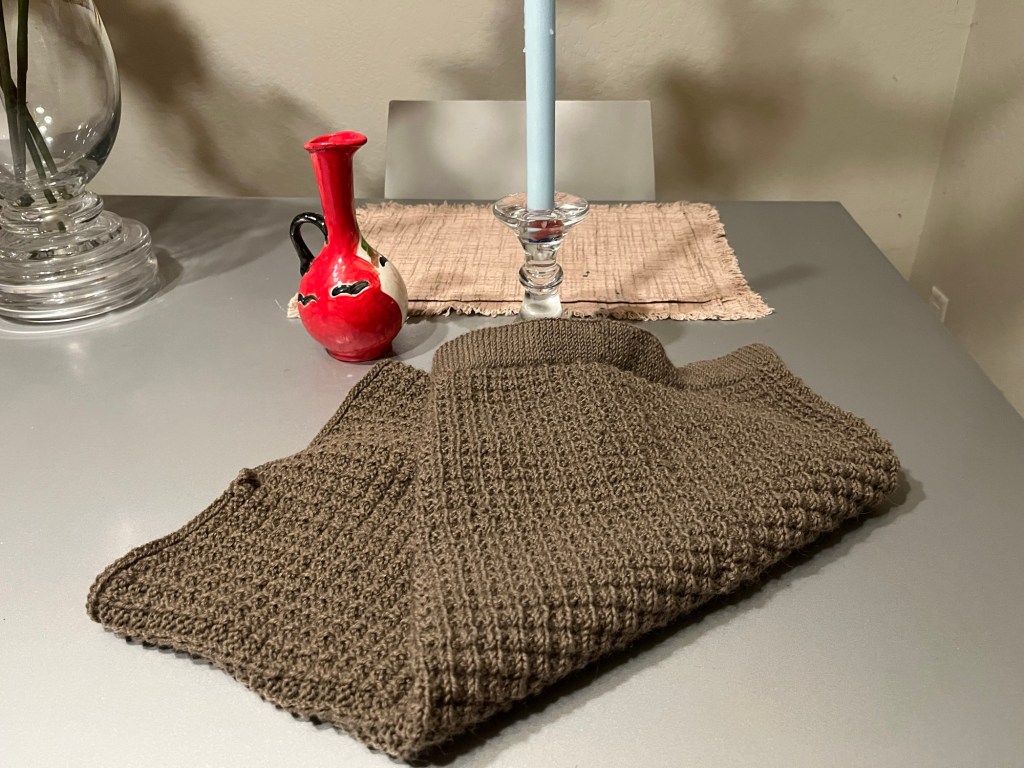
The waffle loop pattern is repetition of four rows, each of which has its own repeated sequence (row 1 = PPK, row 2 = PKK, row 3 = K, row 4 = P).
Because the skirt is knitted in the round, and you are basically going around and around on the same side of the garment, the four-row pattern is slightly different to get the same effect: PPK, PPK, K, K.
Note that it is important for the number of stitches on the needles to be a multiple of three, so that the stitches in each successive row are aligned with each other.
Knitting this skirt was my first experience with creating a waistband and with using short-row shaping for the backside. I’m grateful to the online knitting community for their excellent instructions.
Many thanks also to Other Loops for this Waffle Loop Skirt pattern.
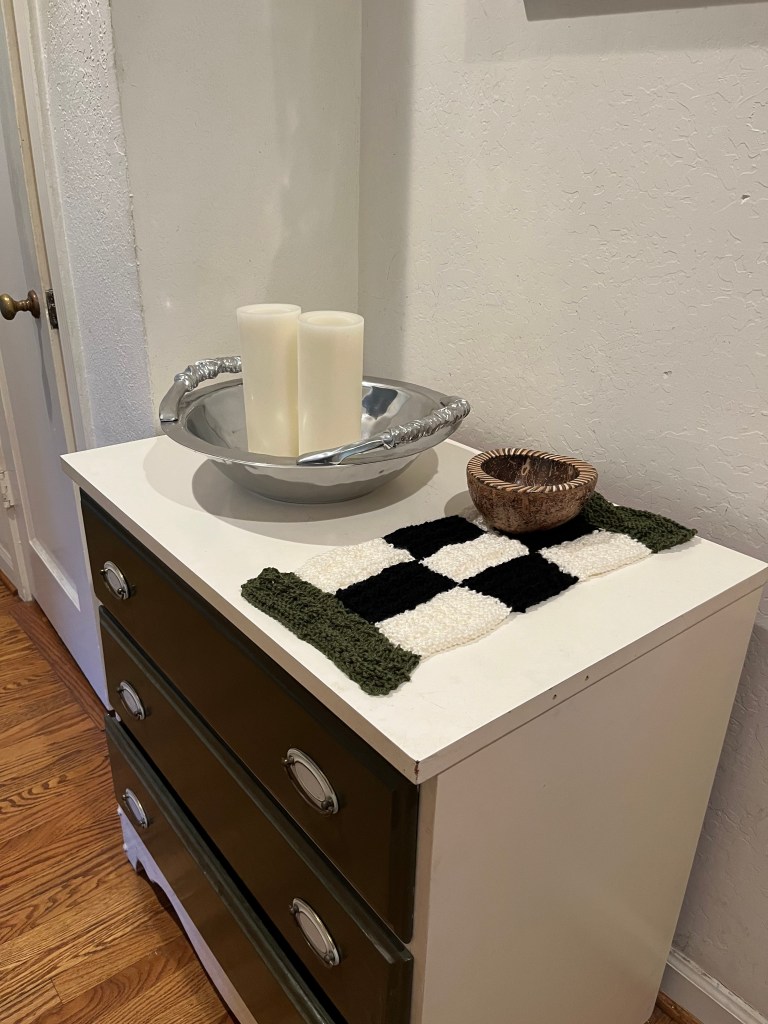
This mat adds interest to an empty hallway. I knitted each rectangle in a waffle loop pattern and then stitched the rectangles together. The waffle loop pattern is a repetition of three stitches in four rows: PPK the first row, PKK the second row, K the third row, and P the fourth row.
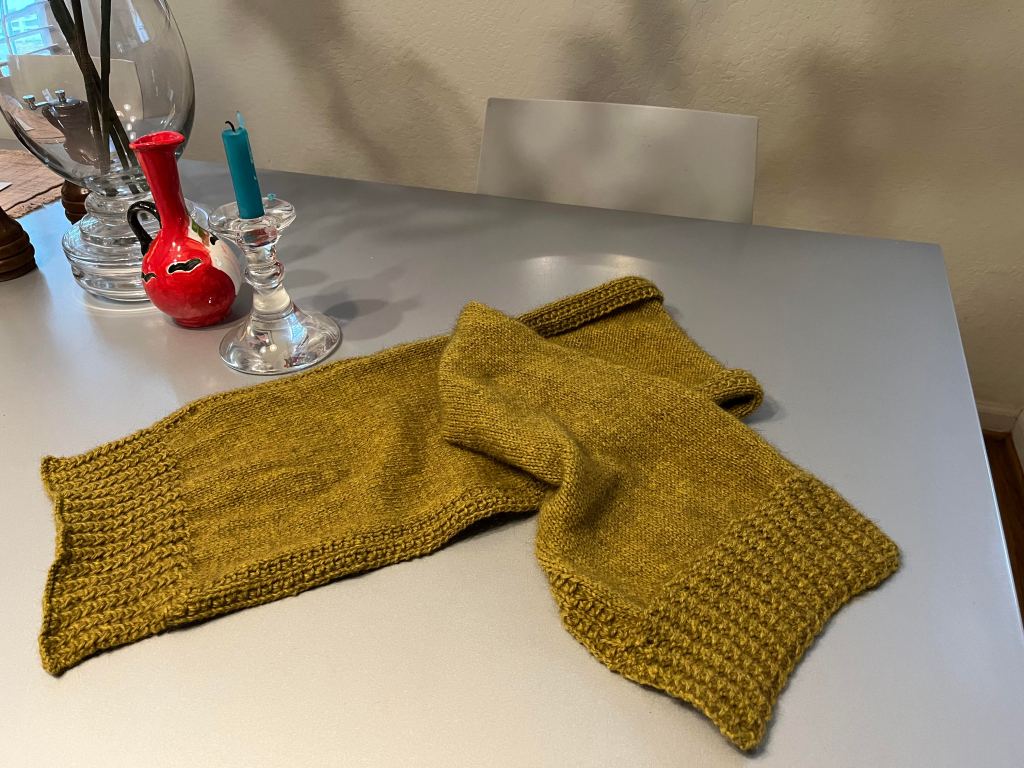
I’m excited to pair this scarf with black, white, aubergine and other colors this winter.
The pattern is the Ra scarf by Annoline Billies.
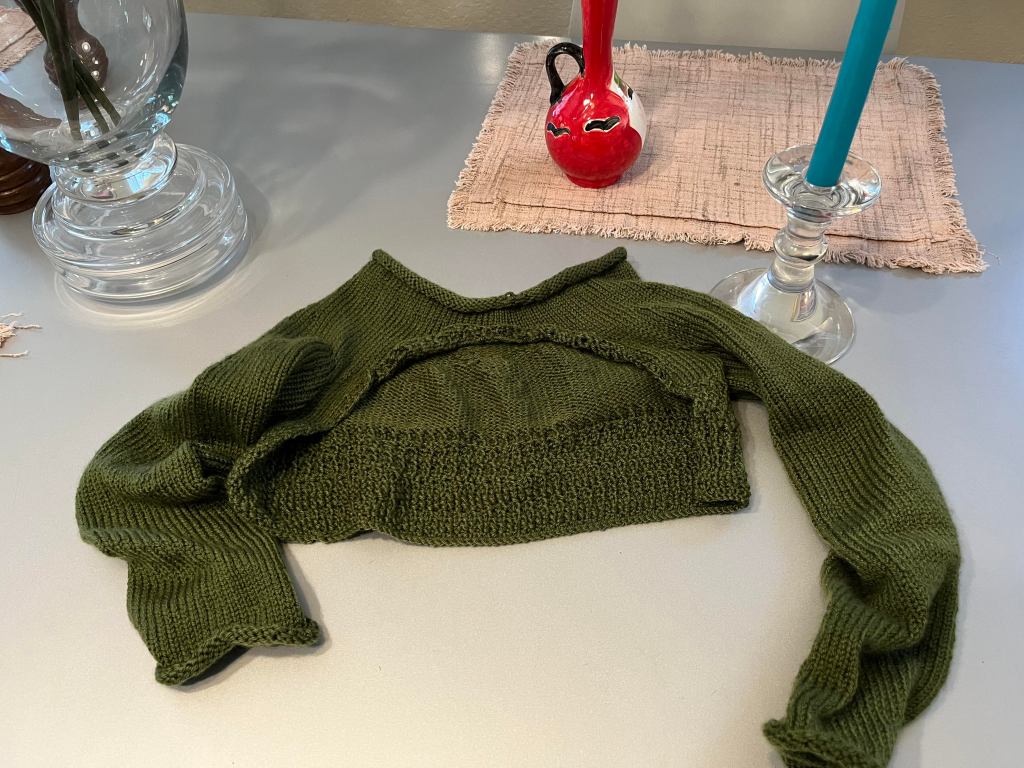
One nice thing about knitting is that you can make unusual garments that aren’t found in stores. Grateful to marijay j for this rave sleeves pattern, which I adapted for this project.
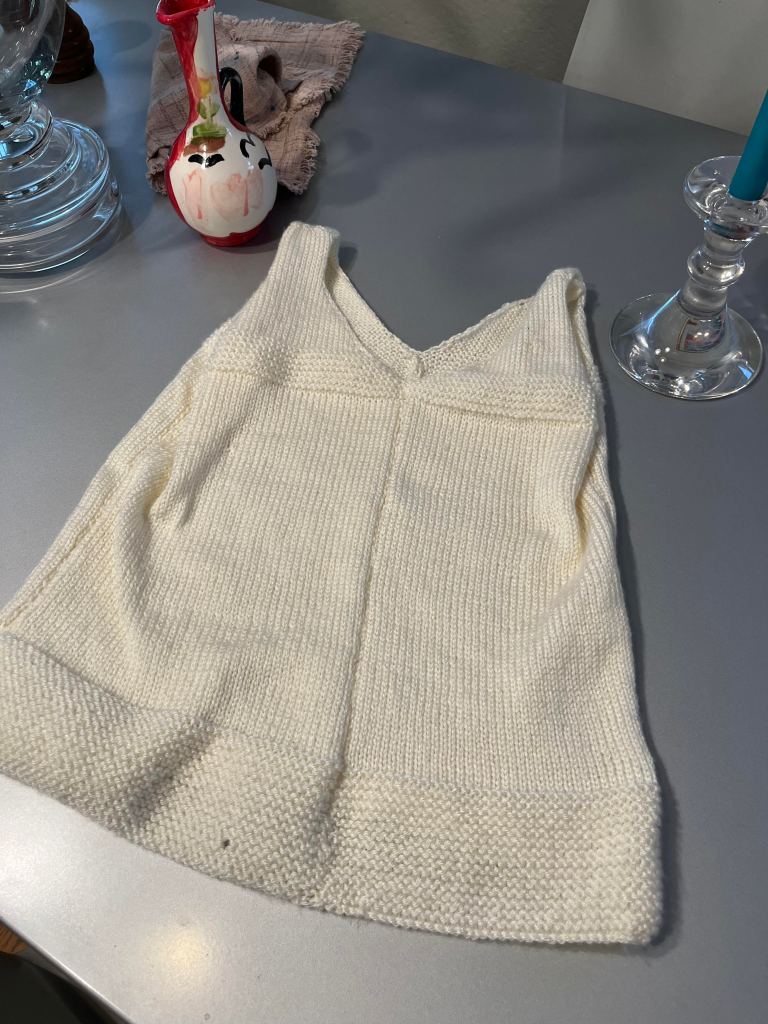
Knitted this white camisole for myself after finishing the black one for my daughter.
Grateful for the Remi Camisole pattern by Caldree on Ravelry. I kept the shape of the garment but dropped the fancy stitching because it’s too advanced for me.
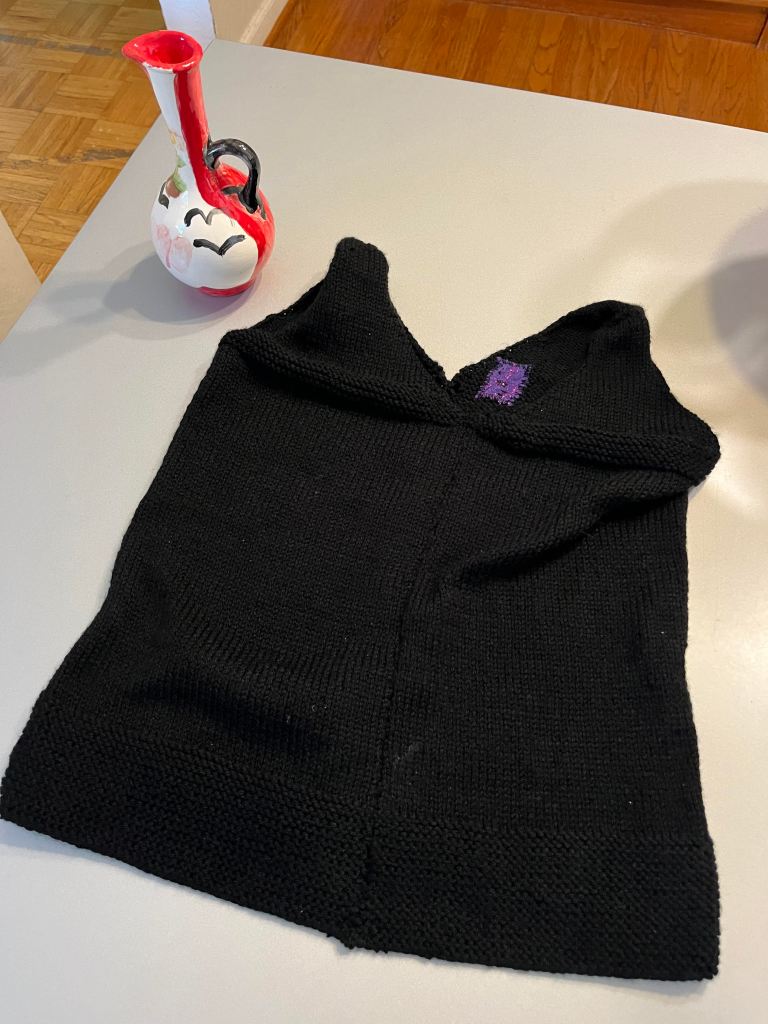
I knitted this camisole for my daughter’s birthday, and she likes it. It can be worn by itself on a cool day or evening or worn as a sweater vest over a T-shirt when it’s colder.
Knitting gives you great opportunities to think about things and come up with new ideas. I will be sharing ideas from my knitting on this blog, and I welcome you to do the same.
Today I was reflecting on the snobbery some city-dwellers express toward those who live in the suburbs. To be sure, there is justifiable pride in making your way in a city. Living in close proximity with many other people requires you to make continuous small negotiations and to set precise boundaries about your values and how you interact. It’s a huge skillset.
Additionally, cities are great manifesters of economies of scale, and they reduce people’s carbon footprint because the logistics of human consumption are simplified.
In a city, there is a rhythm set by everyone working on their own goals while making allowances for others to accomplish theirs.
But living outside of a city, in a suburb or a rural area, is a valid choice as well. When you live in a city, the city itself is one of your relationships, and some people choose not to have that relationship in order to free their minds for other things. Many times, the “other things” are big conceptual projects. Here in Silicon Valley, there are a lot of thinkers.
Those conceptual endeavors lead to monumental improvements in people’s lives.
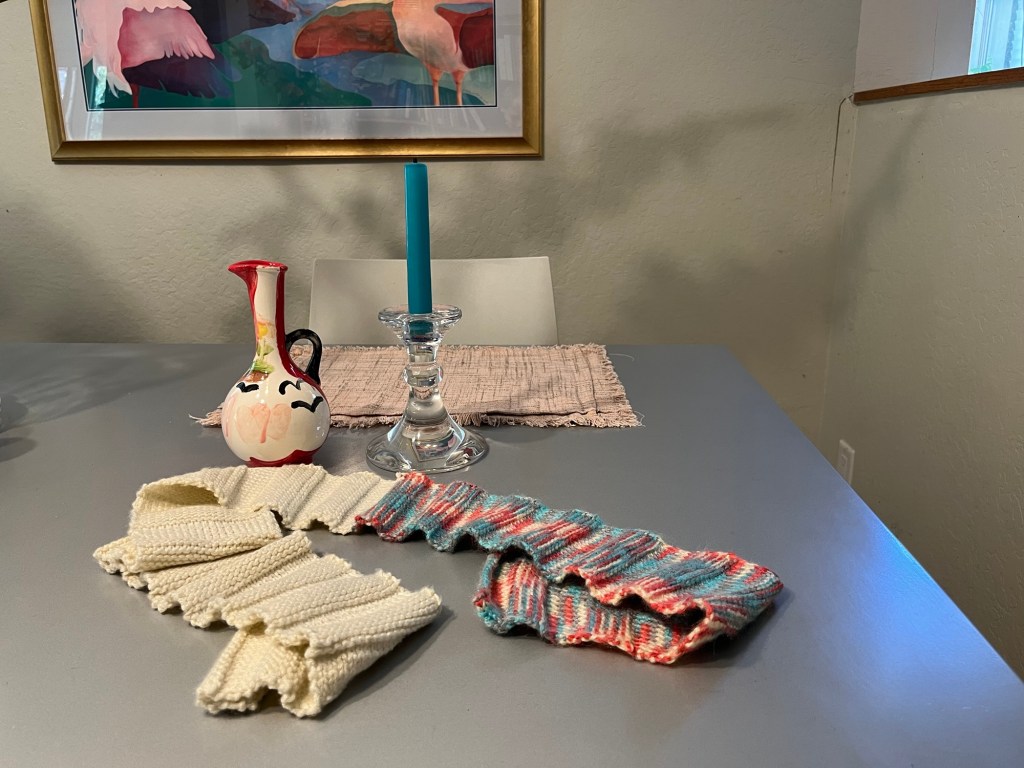
There was sturm and drang several days ago when I ripped this scarf apart because it was way too wide. Now I love the narrow length. The pattern is knitting a seven-row block in a KPKPKPK sequence (stockinette pattern), then switching the order for the next seven rows (PKPKPKP), and continuing like that, alternating the seven-row blocks for the full length of the scarf.
The design is two fifths multi-colored and three fifths white. This was partially dictated by the yarn I had available, but the result is stylish in my humble opinion.
 Casting On